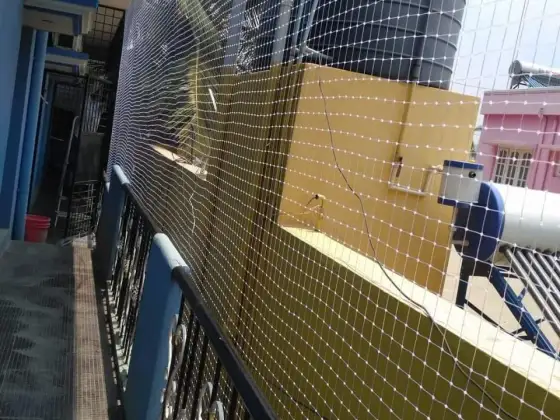
Why pigeons choose your balcony
Pigeons are descendants of cliff-dwelling rock doves, so tall buildings with ledges feel natural to them. A balcony offers shade from the Chennai sun, shelter from the monsoon, a stable ledge for a nest and, very often, a steady supply of food scraps from nearby homes.
Once a pair finds a spot that works, they return every season and raise several broods a year. Each generation learns the same location, which is why a small problem in January can become a serious one by June.
Why it is more than a nuisance
Pigeon droppings are acidic and stain paint, tiles and clothes. Left for long, they corrode metal railings and clog drain outlets. Feathers, nesting material and old nests block ducts and AC drain lines.
There are also health concerns. Dried droppings can carry organisms that cause respiratory illnesses, and old nests can harbour mites. People with asthma, allergies or weak immunity, as well as small children and elderly relatives, should avoid breathing dust from droppings. If anyone in your home has a chronic lung condition, speak to a doctor about precautions.
What does not work
Many households try cheap fixes before calling a professional. Most of them only delay the problem.
- Hanging CDs or reflective tape: pigeons get used to them within days.
- Plastic owls and scarecrows: birds quickly learn they never move.
- Sprays and gels: they wash off in the rain and need constant reapplication.
- Spikes: pigeons often build nests on top of them, and they do nothing for enclosed balconies.
- Regular feeding nearby: even if you do not feed them, a neighbour who does will keep flocks in the area.
Why a pigeon net is the lasting fix
A pigeon net physically closes the space. Birds cannot land, nest or enter, so there is nothing for them to return to. It is also humane: the birds simply move elsewhere without being trapped or harmed.
A well-fitted net is nearly invisible from inside the home. Light, air and view continue as before, and the balcony stays usable for plants, seating or drying clothes.
Choosing the right net
Not every net is equal. These are the points that decide how long it lasts and how well it works:
- Mesh size of about 40 to 50 mm keeps pigeons out while letting air through.
- Knotless HDPE or nylon holds tension better than knotted net and is gentler on birds.
- UV-stabilised material resists Chennai's strong sun, so the net does not turn brittle.
- Stainless-steel hooks and clips resist rust in humid or coastal air.
- A neat, taut finish with sealed edges, because pigeons find any gap.
Clean up safely before netting
If there are old nests or a build-up of droppings, clean them safely first. Wear gloves and a mask, dampen the droppings with water before removing them so dust does not rise, and bag the waste. Avoid dry sweeping or using a high-pressure hose indoors.
If there are eggs or chicks, speak to your installer about the safest approach. A good team will advise you and, where possible, time the work to avoid harm to young birds.
A simple checklist before you book
Use this list when you compare quotes from installers:
- Do they measure the balcony in person before quoting?
- Do they specify the mesh size, material and fixings in writing?
- Will every edge, corner and junction be sealed?
- Can you open or lift the net to clean windows and service the AC?
- Do they explain how to care for the net afterwards?
Related services
Further reading: Rock dove (Wikipedia)