What makes T Nagar different
Pigeons roost on a sheltered building ledge within days of it being left open, and each pair can raise several broods a year. Constant crowds and noise mean installers must work quickly and neatly, often in short access windows.
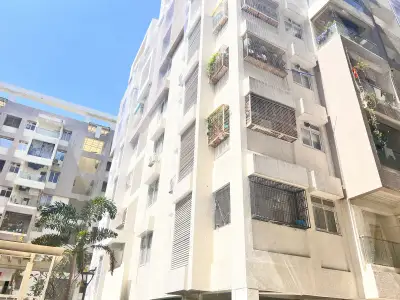
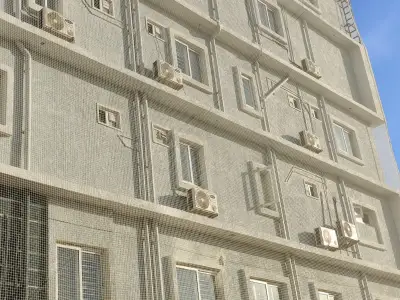
Very tight building spacing means balcony nets often have to be tailored around neighbouring walls and AC condensers. Droppings on the building ledge damage paint and corrode metal, and dried droppings become airborne dust.
What we see in T Nagar
The combination of food stalls, crowded streets and tightly packed buildings makes T Nagar one of the hardest-hit areas for pigeons in the city. It also makes installation work more demanding, with limited parking, busy pavements and neighbouring walls only a few feet away.
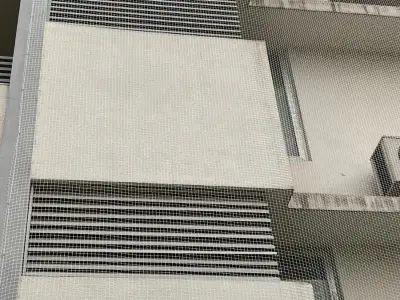
In T Nagar, pigeons feed on the shopping streets all day and roost on the flats above and behind them. Balconies, AC ledges and window sunshades facing the lanes are the worst affected. We fit nets around AC condensers and pipes and seal every gap, because in an area with this many pigeons any small opening will be found quickly.
Installing pigeon nets for buildings around Pondy Bazaar
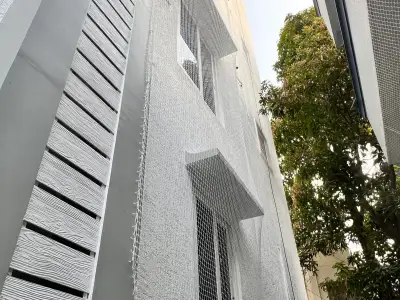
Facade work follows a floor-by-floor plan, with edges sealed to the structure and panels overlapped for full coverage. We measure the opening and choose a mesh small enough to keep pigeons out but still let air and light through. A final walk-round checks each anchor and seam for anything a bird could use as an entry point.
Around T Nagar we work on high-density apartment blocks, commercial towers with residences above and old independent houses converted to flats; each has its own ledges, gaps and fixing points that a bird will find.
We plan work with the building manager or committee to keep residents safe and informed.
What goes into a good pigeon nets for buildings installation
Our pigeon nets for buildings jobs use Knotless HDPE or nylon pigeon net, UV-stabilised binding cord, Stainless-steel hooks and clips and Corrosion-resistant fixing screws.
Textile and jewellery showrooms with food stalls below keep pigeons and crows crowded around the shopping streets.
What to ask any installer before you agree:
- Look for UV-stabilised material, so the net does not turn brittle and snap in Chennai's summer sun.
- Ask for knotless nylon or HDPE netting, which is gentler on birds and stays tauter than knotted net.
- Choose mesh of about 40 to 50 mm for pigeons, since a larger mesh lets small chicks slip in.
How pigeon nets for buildings is priced near Pondy Bazaar
Prices for pigeon nets for buildings in T Nagar depend on the job rather than a fixed rate. The main factors are:
Call or message us for a free site visit in T Nagar and a written quote with no obligation.
- Cleaning out old nests and droppings before installation is charged separately when needed.
- Height and access matter, since upper-floor work may need rope-access or a suspended platform.
- Mesh grade and cord thickness affect both price and lifespan.
How a pigeon nets for buildings job works
We arrange the T Nagar visit around your schedule, then confirm scope, materials and timing in writing.
- Free site visit and measurement of the affected area
- Selection of the right mesh and fixing plan
- Installation sealing every gap birds could use
- Final inspection and a short care guide
Keeping pigeon nets for buildings in good shape
To get the most from pigeon nets for buildings in T Nagar, we suggest this simple routine:
- Hose the net gently every few months to wash off dust and any stray droppings.
- Check for tears or loose hooks after storms and repair them promptly.
- Keep plants and hanging items clear of the net so nothing tears or stretches it.
Pigeon nets for buildings across T Nagar and nearby areas
Besides T Nagar, we serve Ashok Nagar, Vadapalani, Teynampet and Saidapet and the wider Central Chennai. Our team plans routes around Panagal Park and Usman Road so visits are quick and tidy.
Further reading: Rock dove (Wikipedia)